
In this week’s edition:
Mortality as liberation
Presidents with Appalachian Roots
Appalachia in the news
Know your Appalachian neighbors
The Back Page
––––––––––––––––––––
🧠 The Thought Crossed My Mind
Weekly Observations About Things
––––––––––––––––––––
Mortality As Liberation
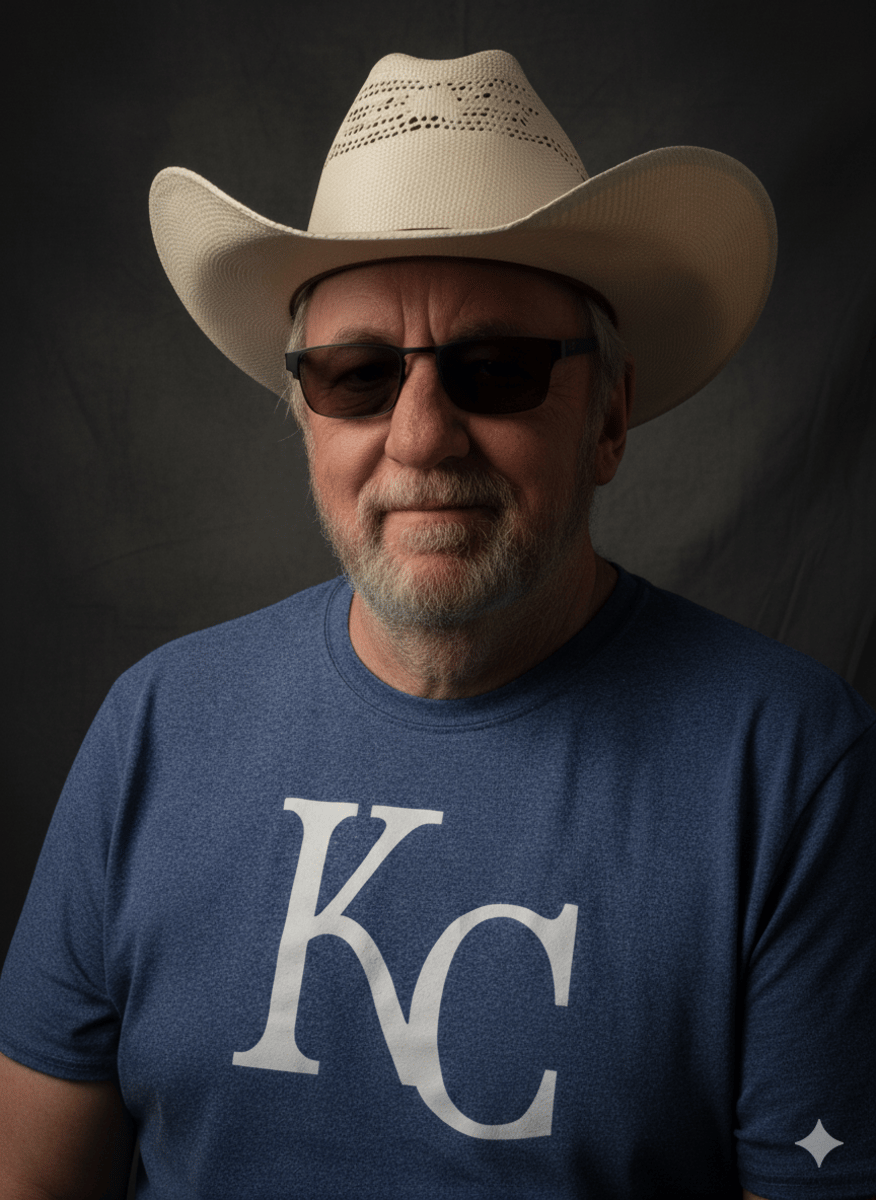
I have been pondering my own mortality lately, for no particular reason other than I just turned 69 years old, which means next year I hit the decade when a very high percentage of men my age begin to fall apart.
Always the over-achiever, I, of course, had to get a head start.
These old knees scream every time I get out of a car. I thought surgery was supposed to cure that.
Remember those jokes about Arthur Ritus? Well, the joke is on me now. Depending on the day and hour, old Arthur will be busy at work on my hands, fingers, and even feet and toes if he’s feeling extra mean.
I could go on, but you get the idea. I'm not a smart man, but I don't need an anvil to fall on my head to realize that I am ultimately doomed. The only unknown is the timeline.
Some folks don't like to think about their future demise in any meaningful way. Maybe they think it's bad luck or something. Maybe they think death is like a salesman at the front door. If they don't answer, maybe he'll move on to the next house.
But here's the thing nobody tells you about staring at the finish line—it sharpens everything behind you. I'm not morbid. I'm focused. Knowing the clock is real makes every Tuesday afternoon feel like something worth showing up for.
And when I get tired of that, I have six decades of wonderful memories to ponder.
Six decades.
That's a lot of sunrises I didn't appreciate and a few sunsets I'll never forget.
I've buried people I loved and toasted people I couldn't stand. I've made decisions so stupid they should be taught in schools as cautionary tales, and somehow stumbled into a handful of moments so perfect they don't even feel like they belong to me.
And that's the thing about mortality. It's not the enemy.
It's the editor.
It cuts the fluff. Makes you stop arguing about things that don't matter. Makes you hold a look a little longer, laugh a little louder, and actually taste the coffee instead of just mainlining it on the way to somewhere you didn't want to be in the first place.
So yeah. The knees are shot. Arthur Ritus has moved in like a freeloading cousin with no return ticket. The warranty on this body expired a long time ago.
But the hard drive?
Still full.
And every now and then, on a quiet evening when the world slows down just enough, I can scroll through it all — the good, the bad, the stuff that still makes me wince at 2 a.m. — and think, that was one hell of a ride.
Still is.
––––––––––––––––––––
🪑 THE FRONT PORCH
Talk it over whilst whittlin’, quiltin’, or porch sittin’
––––––––––––––––––––
From the Oval Office to the Front Porch: U.S. Presidents with Appalachian Roots

George Washington was the first of several U.S presidents with ties to Appalachia
A salute for President’s Day
Appalachia never needed a skyline.
Never needed a stock exchange or a Super Bowl halftime show. What it had was dirt, timber, stubbornness, and a knack for raising people who refused to quit.
Some of those people ended up running the country.
Start with George Washington.
Before he was the father of anything, he was a teenage surveyor tramping through the backcountry of western Virginia — right on the ragged hem of Appalachia. Sleeping in the woods. Eating whatever he could kill. Learning that mountains don't care about your pedigree.
His early military service came in the Ohio Valley, a place most historians file under "greater Appalachian frontier," which is a polite way of saying it was beautiful, violent, and absolutely unforgiving.
That's where he got hard.
Not textbook hard. Not debate-club hard. Hard like a man who had to read terrain the way a butcher reads a carcass — fast, or you're the one on the table.
By the time the Revolution showed up, the backcountry had already taught him everything he needed to know about leading men who'd rather be home.
Then there's Abraham Lincoln.
Born in a Kentucky cabin to parents with deep Virginia mountain roots. Raised in log cabins that leaked when it rained and froze when it didn't.
HIs birthplace is just outside the boundaries set by the Appalachian Regional Commission, but in Lincoln’s time Hopkinsville, Kentucky was in the heart of the new frontier.
Lincoln's famous plainspokenness? That wasn't a political strategy. That was a man who grew up around people who didn't have time for fancy talk because there were stumps to pull and hogs to feed.
His stubbornness — the thing that held the Union together by its fingernails — came from the same place. Frontier people don't quit because quitting means starving.
He just applied that principle to a nation.
Andrew Jackson was raised in the Carolina backcountry, right along the Appalachian frontier, where the definition of "neighbor" was anyone within a half-day's ride and the definition of "government" was something to be deeply suspicious of.
He carried that suspicion straight into the White House like a muddy bootprint on a marble floor.
Jackson embodied the fiercely independent streak that defined early mountain settlers — people who figured if the law wouldn't protect them, they'd protect themselves. His presidency marked the moment the frontier stopped asking permission and started giving orders.
James K. Polk had family roots tangled through the mountains of North Carolina and Tennessee. He expanded the country westward with the same single-mindedness that drove a thousand Appalachian families to load a wagon and cross the next ridge just to see what was on the other side.
His whole presidency was basically the political version of a man who can't stop clearing land.
Then came Lyndon Johnson.
A Texan, sure. But Johnson made Appalachia the centerpiece of his War on Poverty — dragged the nation's cameras into the hollows and said, look at this.
He didn't have mountain blood. But he understood something the mountains teach everyone who pays attention: that poverty in America isn't laziness dressed up in overalls. It's geography. It's infrastructure. It's generations of being told your zip code is your ceiling.
Here's the thing people miss when they draw those red-and-blue election maps and treat Appalachia like a footnote.
The region didn't just produce presidents. It produced a way of thinking that shaped the whole country — self-reliance that borders on religion, skepticism of anyone in a suit who claims to have your best interests at heart, loyalty to family that runs deeper than any party affiliation, and a patriotism that doesn't need a bumper sticker because it already buried its sons in foreign soil.
The mountains look remote on a map.
They always have.
But their spirit has been walking the halls of power since before the halls were even built.
––––––––––––––––––––
📰❓ Appalachia In The News
What the heck is going on around here?
––––––––––––––––––––
FROM THE DESK DRAWER
The Handwriting First Aid Kit
Quick fixes for grown-up penmanship. No drills. No worksheets. Just the stuff that actually works.
$4.99 Instant Download
––––––––––––––––––––
🗺 KNOW YOUR NEIGHBORS
Visit all 423 Appalachian counties, one week at a time
––––––––––––––––––––
This Week: #170 Schoharie County, New York
Smack-dab in the middle of the Empire State, with a heart as big as Appalachia.

Schoharie County/Source: Wikipedia
Schoharie County is a county in New York. As of the 2020 census, the population was 29,714, making it the state's fifth-least populous county. The county seat is Schoharie."Schoharie" comes from a Mohawk word meaning "floating driftwood." Schoharie County is part of the Albany-Schenectady-Troy, NY Metropolitan Statistical Area and thus the Capital District of New York. The county is part of the Mohawk Valley region of the state. Schoharie County is in central New York State, west of Albany and southeast of Utica.

Much of the southern portion of the county lies within the Catskill Mountains. Land rises in both directions quite rapidly east and east of Schoharie Creek in the middle of the county. In contrast, the northern part of the county is predominately small hills and valleys. More than 75% of the county's population lives in the north, closer to the Mohawk River, the historic transportation route east and west through the state.
5 Things Schoharie County Is Famous For:
Breadbasket of the American Revolution: The fertile Schoharie Valley was a primary source of wheat and grain for George Washington’s Continental Army.
Caves and Karst Topography: It is home to some of the most famous show caves in the Northeast, including Howe Caverns, which draws over 150,000 visitors annually.
The Old Stone Fort: This 1772 church-turned-fortification is one of the few surviving Revolutionary War defensive structures in the region.
The Gilboa Fossils: The Gilboa Museum houses remains of the world's oldest known forests, dating back roughly 380 million years.
Agricultural Heritage: The county remains a hub for farm-to-table production, famously celebrated at the Schoharie County Sunshine Fair.
4 Great Places To Eat
Apple Barrel Cafe: An award-winning local favorite known for hearty lunches and a legendary country store atmosphere.
The Country Cafe: A classic, no-frills diner famous for its enormous portions and "patriotic" breakfast specials.
Bull's Head Inn : Established in 1802, this landmark offers a fine-dining experience in a historic setting.
Wayward Lane Brewing: For those seeking craft culture, this brewery recently won state-wide awards for its beer and offers a scenic taproom.
3 Places To Visit
Howe Caverns: Take the 156-foot elevator ride underground for a boat trip on a subterranean river.
Vroman’s Nose: A short but steep hike leading to a massive, flat-topped "nose" with stunning panoramic views of the Schoharie Valley.
Iroquois Indian Museum: Located in Cobleskill, it holds one of the largest collections of Iroquois art in the United States and features traditional dance and music performances.
2 Famous People
Timothy Murphy: A legendary Revolutionary War sniper who lived in Middleburgh; his shot at the Battle of Saratoga is credited with turning the tide of the war.
William C. Bouck: The 13th Governor of New York (1843–1844) was born in Fultonham and spent his life farming in the Schoharie Valley.
1. Thing To Know:
Schoharie is a Mohawk word meaning "Floating Driftwood." This refers to the massive piles of debris that historically accumulated at the meeting of the Schoharie and Fox Creeks—a name that reflects the county's deep indigenous roots and the power of the water that shaped its geography.
––––––––––––––––––––
📰 THE BACK PAGE
The Caboose of The Wayne Train
––––––––––––––––––––
If you messed up and forgot Valentine’s Day, here’s your shot at redemption. Click the ad for details.
